
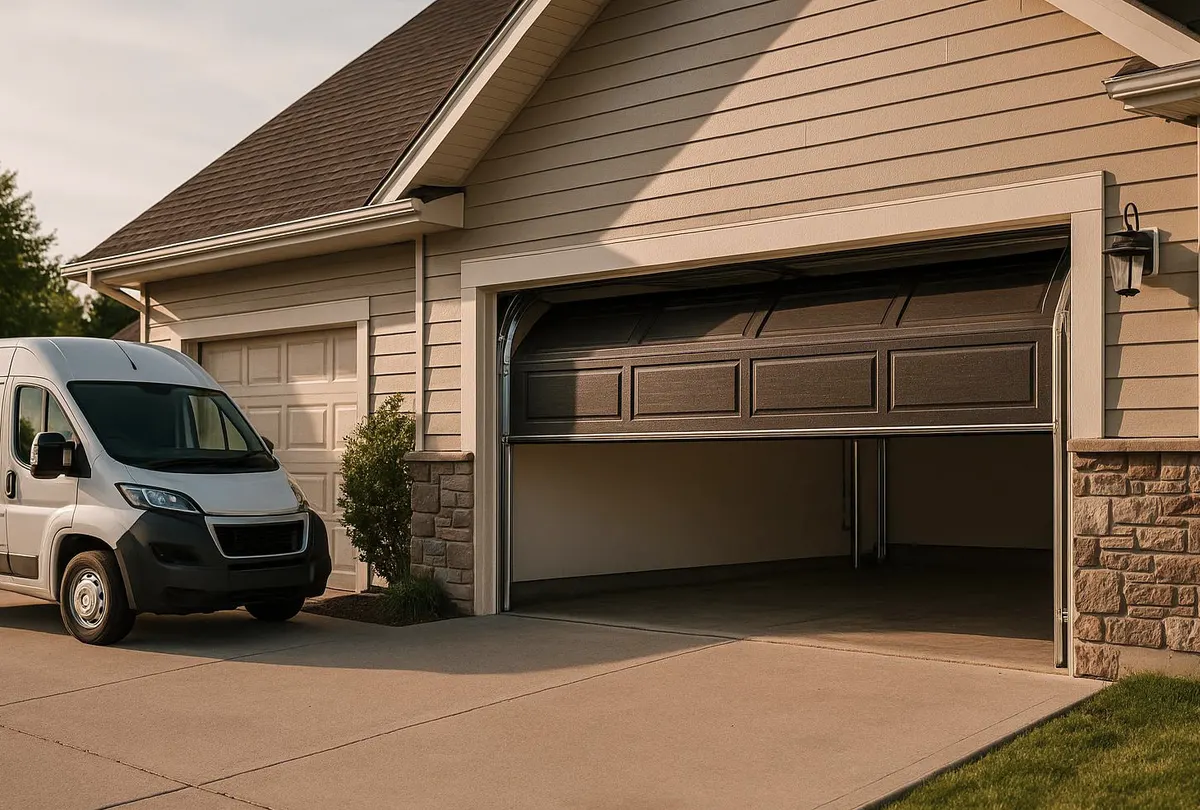
You hear it before you see it: that first good December rain hits, and when you open the garage the next morning there's a line of water pooled along the bottom of the door, maybe a damp patch creeping up the drywall, or a grinding sound as the door catches on a track that wasn't doing that in October. Nothing was wrong all summer. Then the weather changes, and suddenly it is.
Garage doors in this part of California don't deal with snow or deep freezes, but they take a real beating from the fall-to-winter shift: dry, dusty months giving way to sustained rain, salt-laden air for homes closer to the water, and the kind of temperature swings that make metal expand and contract. None of that damage happens all at once. It shows up as small symptoms first, and late November is the right window to catch them before the rainy season is in full swing.
What the Season Actually Does to a Garage Door
After a long dry stretch, most garage doors are carrying a layer of dust and grit in the tracks and rollers. That grit mixes with the first rains and turns into grinding paste right where your door needs to move smoothly. At the same time, wood and composite doors that spent summer drying out start absorbing moisture again, which can cause swelling, sticking, or a door that no longer seats evenly against the weatherstripping.
Homes nearer the coast deal with an added factor: salt air accelerates corrosion on springs, hinges, and exposed hardware. If your door has started squeaking more than usual or you're seeing a fine orange bloom on bolts and brackets, that's the salt air talking, not just age.
Water Where It Shouldn't Be
Weatherstripping along the bottom and sides of the door is the first line of defense against winter rain, and it's also the part most people forget to check. Sun exposure over the summer dries it out and makes it brittle, so by the time the rain arrives, it's cracked or pulling away from the frame instead of sealing against it. Run a hand along the bottom seal and both side seals — if it feels stiff, flattened, or has visible gaps, water will find its way in during a heavy storm.
Springs, Cables, and the Cold-Weather Catch
Garage door springs do the heavy lifting every time the door opens, and cooler, damper air makes metal slightly less forgiving. A spring that was already fatigued from years of use is more likely to show stress now — listen for a loud bang (a spring snapping), a door that feels heavier than usual when opened manually, or cables that look frayed near the bottom bracket. These aren't maintenance items you fix with lubricant; a worn spring under tension is one of the more dangerous DIY repairs a homeowner can attempt.
A Practical Pre-Winter Checklist
- Inspect and replace weatherstripping if it's cracked, flattened, or no longer sealing flush against the door and frame.
- Clear tracks and rollers of summer dust before lubricating — grit trapped under oil causes more friction, not less.
- Lubricate hinges, rollers, and springs with a silicone-based garage door lubricant, not household oil, which attracts dust and grime.
- Check all hardware for rust or corrosion, especially if the home is closer to the water, and tighten any loose bolts or brackets.
- Test the auto-reverse safety sensors by placing an object in the door's path — cold, damp mornings are when sensor misalignment tends to show up first.
- Listen for new sounds — grinding, popping, or a door that hesitates partway through its cycle are all early warnings worth acting on now rather than in January.
- Confirm the opener's battery backup works, since winter storms are more likely to bring brief power outages.
If your home has had seismic retrofit work done, it's also worth a quick visual check that braces and anchoring hardware around the garage opening haven't shifted or corroded — not a seasonal issue exactly, but a good thing to glance at while you're already in there checking everything else.
When to Call In Foster City Garage Door Service
Weatherstripping and lubrication are reasonable DIY jobs. Anything involving springs, cables, or a door that's misaligned in its tracks is not — the tension involved makes it genuinely risky to handle without the right tools. If your inspection turns up a worn spring, persistent grinding, or a door that won't seal evenly no matter how you adjust the stripping, that's when to call us. We handle Spring Replacement and full Garage Door Maintenance visits for homeowners throughout Foster City and San Mateo County, and we can usually get a technician out before the next storm rolls through.
If you're hearing new noises, seeing water where it shouldn't be, or just want the door checked before winter settles in, give Foster City Garage Door Service a call. We serve Foster City, CA and the surrounding area, and we'd rather fix a small issue in November than an emergency call in the middle of a January downpour.