
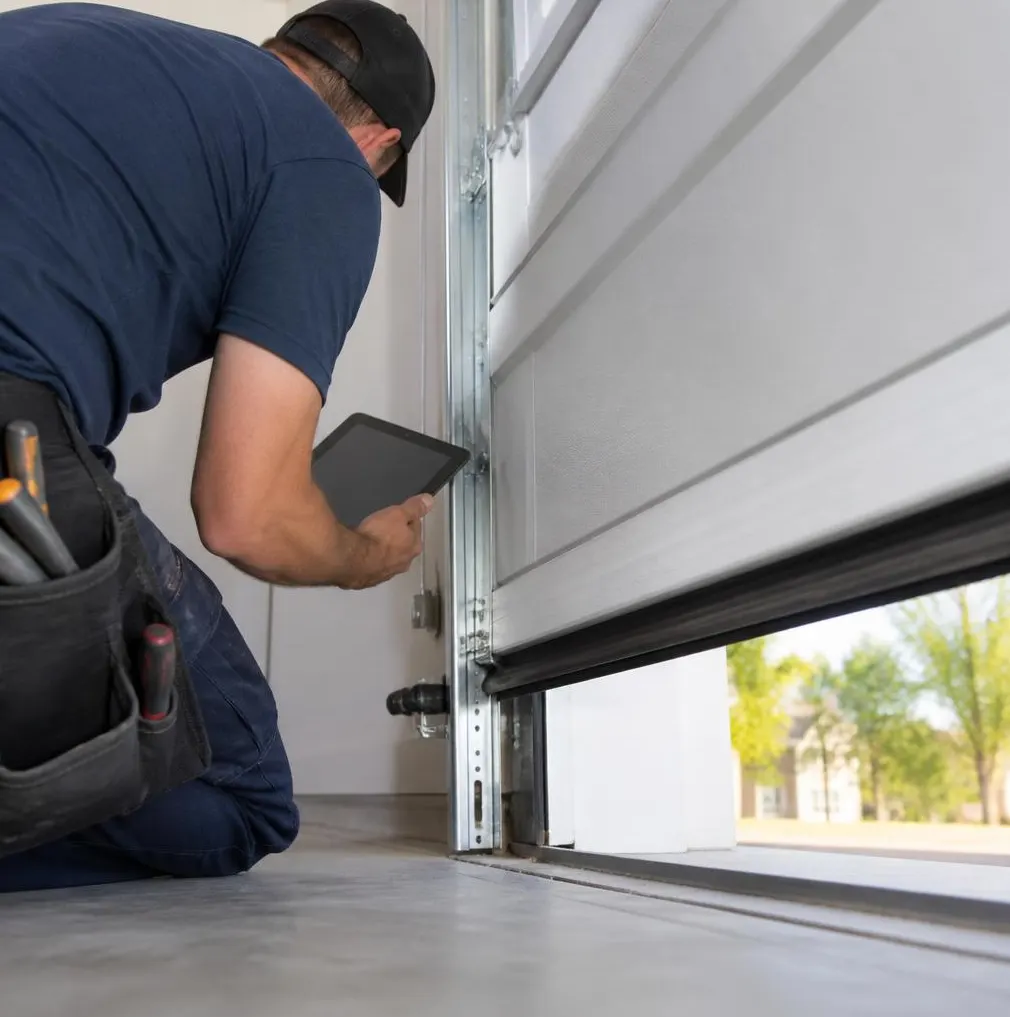
What a technician sees on a typical call
The call usually starts the same way: one spouse thinks the rust spots near the bottom corners of the garage door are "just surface stuff," and the other wants the whole door replaced. When a technician shows up, here's what's actually going on more often than not: small bubbles of rust along the bottom panel where water pools after rain, a slight swelling or warping on one side of a wood or composite door, and a faint musty smell near the weatherstripping at the base. Sometimes there's a ring of white, chalky residue on steel panels close to the coast — that's salt air doing its slow work. None of this means the door is falling apart, but none of it should be ignored either.
Why this shows up in this part of California
Garage doors here deal with a strange mix of conditions. Summers are often dry with dust and occasional wildfire smoke, which doesn't cause moisture problems on its own but does mean doors go months with no rain exposure, then suddenly get hit hard once the winter rain season starts. That swing from bone-dry to soaked is rougher on materials than steady humidity would be. Add in salt-laden air for homes closer to the water, and you've got two slow but steady causes of corrosion and swelling working at the same time. Garages that aren't well ventilated trap moisture after rain, which is exactly when rust gets a foothold on steel hardware and tracks.
Rust, swelling, and water staining are not the same problem
Rust
Rust on a steel garage door almost always starts where water sits the longest: the bottom panel, the corners, and any spot where the factory finish got scratched or chipped. Surface rust (a thin orange film you can wipe or sand off) is cosmetic and worth treating before it spreads. Rust that's bubbling the paint or has eaten a pit into the metal is structural — the metal is thinning, and that panel will eventually need replacing.
Swelling
This is mostly a wood or composite-wood door issue. Wood absorbs moisture, expands, and then shrinks back as it dries, and repeated cycles of this over a rainy season can cause a door to warp, stick in the track, or no longer sit flush against the frame. A door that drags at the bottom or won't seal evenly against the weatherstripping is often swelling, not a broken spring or bad alignment.
Moisture damage and mold
This is the one worth taking seriously fast. If the bottom few inches of a wood panel feel soft, spongy, or crumble slightly when pressed, water has gotten into the core of the panel, not just the surface. A musty smell combined with discoloration on the inside face of the door is a sign moisture is sitting somewhere it shouldn't — often behind the weatherstripping or inside a hollow steel panel that's lost its seal.
So who's right in the argument?
Usually, both of you are a little right. Surface rust spots and minor swelling on one corner are not an emergency and don't mean the door needs to be replaced tomorrow — that's a maintenance issue. But if there's soft wood, a musty smell, or rust that's actually pitted the steel, that's not cosmetic anymore, and waiting usually means a bigger repair bill later, not a smaller one. The honest middle ground: address it now while it's still a touch-up job, before the coming rainy season turns it into a replacement job.
What to do before winter rain sets in
- Clean and dry the bottom panel and tracks after any rain, especially after the first storms following a dry summer.
- Sand and treat surface rust with a rust-inhibiting primer and touch-up paint matched to the door before it spreads under the finish.
- Check the weatherstripping at the base — cracked or gapped seals let water sit against the panel instead of running off.
- Improve garage ventilation if you notice condensation or a musty smell, especially in garages that stay closed up for long stretches during fire-smoke days.
- Wipe down hardware near the coast — hinges, rollers, and tracks — since salt air speeds up corrosion on exposed metal.
- Don't paint over soft or swollen wood — it traps moisture inside instead of letting it dry out.
When it's time to call in Foster City Garage Door Service
If you're seeing pitted rust, a panel that's visibly warped, soft spots on a wood door, or a door that no longer closes flush against the weatherstripping, that's past the DIY touch-up stage. Foster City Garage Door Service can inspect the door, tell you honestly whether it's a repair or a panel replacement, and handle it either way. For doors where rust or swelling has thrown off the balance or alignment, our garage door repair service covers tracks, panels, and hardware. If the damage is isolated to a few panels on an otherwise sound door, new garage door installation doesn't have to mean the whole unit — sometimes a partial replacement is the more practical call, and we'll tell you which one actually makes sense for your door rather than upselling a full replacement you don't need.
If your garage door in Foster City, CA is showing rust, swelling, or that telltale musty smell before the rainy season kicks in, give Foster City Garage Door Service a call and get it looked at before the first real storm makes the decision for you.